

Seal Beach Clears the Way for 1,400 New Homes After Landmark City Council Vote
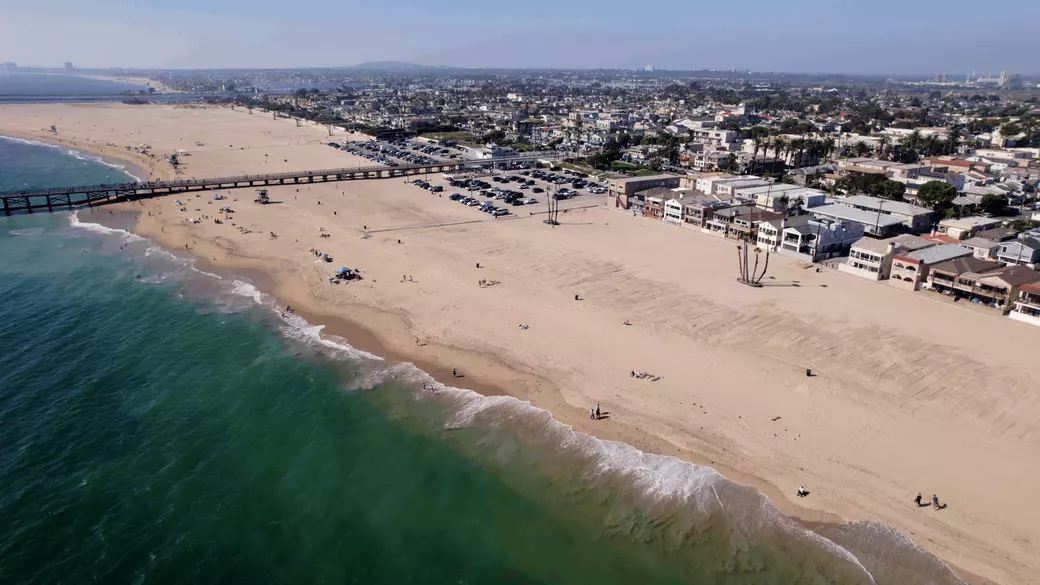
A Four-Hour Showdown That Could Reshape Seal Beach
After years of state pressure and public debate, the Seal Beach City Council voted unanimously to approve the city’s updated Housing Element, overriding a ruling from the Orange County Airport Land Use Commission (ALUC) that had deemed the plan inconsistent with the Joint Forces Training Base (JFTB) Airport Land Use Plan.
The decision, reached shortly after 11 p.m. following a tense four-hour meeting, opens the door for up to 1,400 potential new housing units spread across six rezoned sites. It also updates the city’s Zoning Code, Main Street Specific Plan, and Zoning Map, aligning Seal Beach with California’s state housing mandates through 2029.
The vote marks a defining moment in Seal Beach’s planning history. It’s not merely a policy update; it’s a signal that the city is entering a new era of compliance-driven urban planning, where state law and local identity are on an unavoidable collision course.
Why This Vote Mattered
California’s Regional Housing Needs Allocation (RHNA) law requires cities to plan for enough housing to meet population growth projections. For Seal Beach, that target was 1,243 new residential units in the current planning cycle.
But Seal Beach had fallen out of compliance years ago. Without a certified Housing Element, the city faced serious penalties:
-
Fines ranging from $10,000 to $50,000 per month for continued noncompliance
-
Exposure to lawsuits from the California Department of Housing and Community Development (HCD)
-
Risk of “builder’s remedy” projects that could bypass local zoning entirely
Councilmembers said the choice wasn’t ideal, but necessary.
District Four Councilwoman Patty Senecal emphasized that the vote was about protecting local control:
“The state has made it clear through multiple lawsuits that noncompliant cities lose the right to say no. This plan isn’t perfect, but it’s the only path forward that keeps local decision-making alive.”
District Five Councilman Nathan Steele was even more blunt, calling the state’s approach heavy-handed:
“Sacramento stinks. HCD stinks. But we’re boxed in. If we don’t act, we lose everything.”
What the New Plan Actually Changes
The approved Housing Element designates six primary sites for potential residential growth. Each site was chosen based on land availability, zoning compatibility, and environmental constraints.
1. Old Ranch Country Club – 3901 Lampson Avenue
This 128-acre golf course is the largest single parcel in the plan. While the current approval does not authorize construction, the site is being counted toward the city’s RHNA target as a potential long-term development area. Future consideration will depend on a new Old Ranch Specific Plan and environmental review.
2. Marina Drive Corridor
Located near the water’s edge and adjacent to commercial uses, this corridor could see mixed-use redevelopment that allows residential units above existing retail and service spaces.
3. Seal Beach Plaza and Adjacent Parcels
This commercial area along Pacific Coast Highway may be rezoned to accommodate high-density residential units, introducing the possibility of vertical mixed-use development in a part of town historically dominated by retail.
4. The Shops at Rossmoor and Adjoining Properties
While technically in a bordering zone, these parcels influence the city’s overall housing strategy. Future revisions could allow limited residential integration into the broader retail corridor.
5. Accurate Storage Site
Identified as an infill opportunity, this underutilized parcel could transition into townhomes or low-rise apartments under the new mixed-use category.
6. Main Street Specific Plan Area
The updated plan now allows residential development on second floors above shops and restaurants along Main Street, reinforcing the area’s walkable character while subtly increasing housing availability.
Introducing the Mixed Commercial Residential High Density Zone
Perhaps the most transformative element of the update is the creation of a new Mixed Commercial Residential High Density Zone. This zoning type allows:
-
Minimum of 40 units per acre
-
Maximum of 46 units per acre
-
Residential uses above ground-floor commercial activity
City planners explained that this category aims to promote walkability, infill housing, and reduced vehicle dependence. It’s the city’s first attempt to introduce urban-style density while preserving architectural scale and coastal aesthetics.
Interim Community Development Director Shaun Temple clarified that the new zone is intended for future redevelopment, not to reclassify existing businesses as nonconforming.
“This zoning will apply only when new construction occurs. Existing commercial operations can continue without changes.”
How State Law Shaped Seal Beach’s Decision
California’s Housing Accountability Act (HAA) and related housing laws have significantly weakened cities’ ability to block new housing. Under these laws, the state can impose penalties or take control of local land use decisions if a city fails to submit an HCD-approved Housing Element.
Neighboring cities like Huntington Beach and Beverly Hills have already faced lawsuits for missing deadlines or refusing to zone for sufficient housing. In the past two years, several cities across Los Angeles and Orange counties have been forced into compliance through settlement agreements or builder’s remedy projects, which allow developers to override local zoning entirely.
For Seal Beach, this vote was about avoiding that fate. By overruling the ALUC and adopting a compliant plan, the city preserves a degree of self-determination over where and how growth happens.
Community Reaction: Progress or Pressure
Reactions from residents were mixed. Longtime homeowners expressed fears about traffic, noise, and overdevelopment. One resident of College Park East said during public comment:
“We didn’t move here to live next to high-density apartments. The charm of Seal Beach is in its space, its quiet, and its balance.”
Others, however, applauded the council’s decision. A local business owner from Main Street said the city needs to evolve to survive:
“We can’t stay frozen in time. Our young families can’t afford to buy here anymore. If we want Seal Beach to stay vibrant, we have to create homes people can actually live in.”
The divide reflects a broader tension across California’s coastal cities: how to balance growth mandates with local character, and how to ensure that affordability doesn’t come at the cost of identity.
Addressing Environmental and Safety Concerns
Some of the proposed sites, including the Old Ranch property, fall within areas influenced by the JFTB Airport Environs Land Use Plan (AELUP). The County’s ALUC originally rejected the city’s Housing Element because portions of these parcels overlapped with potential flight path zones.
Seal Beach planners countered that the law allows local jurisdictions to override ALUC findings, provided they hold a public hearing and demonstrate that their action supports state housing law. The city’s staff report concluded that the risks were minimal, and future EIRs would handle any site-specific hazards.
City Attorney Nick Ghirelli summarized the legal balance succinctly:
“To remain compliant with the state, Seal Beach must plan for housing. To shift sites now would require a brand-new environmental impact report and years of delay. We have few viable alternatives.”
Economic and Real Estate Implications
For homeowners and investors, the rezonings could reshape Seal Beach’s real estate landscape over the next decade. By increasing allowable density and introducing new mixed-use zones, the city has quietly signaled opportunities for redevelopment, land assembly, and long-term property appreciation.
Properties near the Marina Drive corridor, Lampson Avenue, and PCH commercial zones could attract attention from developers seeking to build small-scale multifamily projects. Meanwhile, parcels previously restricted to low-intensity commercial use may now see their underlying land values increase.
From a market standpoint, Seal Beach is positioning itself for gradual, managed growth rather than rapid expansion. New housing could relieve some regional demand pressure while preserving the community’s architectural style and coastal appeal.
For buyers and sellers, this transition creates a unique window of opportunity:
-
Buyers may find long-term appreciation potential in rezoned areas.
-
Sellers could benefit from increased land value as development interest rises.
-
Investors may explore adaptive reuse or joint venture projects under the new zoning code.
Regional Context: How This Affects Rossmoor and Los Alamitos
Seal Beach’s decision also reverberates across neighboring communities. Both Rossmoor and Los Alamitos face similar housing compliance pressures, with limited land and strong neighborhood resistance to density.
If Seal Beach successfully implements mixed-use infill and higher-density zoning without eroding its character, it could serve as a model for these nearby cities. However, it could also increase development pressure along shared corridors such as Lampson Avenue, Los Alamitos Boulevard, and Katella Avenue.
Looking Ahead: What Comes Next
The city will now submit the adopted Housing Element to the California Department of Housing and Community Development (HCD) for final review. Once certified, Seal Beach will regain full compliance and avoid fines.
The next phase will involve preparing Specific Plans for key sites like Old Ranch Country Club and conducting site-specific Environmental Impact Reports (EIRs) before any building permits can be issued. Each proposed project will still require local public hearings and Planning Commission review.
In short, while this vote opens the door to new housing, it does not automatically authorize construction. Instead, it establishes the legal and regulatory foundation that will shape growth for years to come.
Conclusion: A Turning Point for Seal Beach
Seal Beach’s unanimous decision to override the County and embrace its housing mandate represents a watershed moment in local governance. It’s a balancing act between state compliance, local control, and the preservation of community character.
Whether residents see it as progress or pressure, the reality is clear: this decision ensures Seal Beach’s future will be defined by proactive planning rather than state intervention.
For anyone living in or near Seal Beach, Rossmoor, or Los Alamitos, the implications of this plan will unfold slowly but decisively. It affects not only where homes are built, but how property values, traffic, and community life evolve in the coming decade.
Follow me on Social Media
👋 Instagram 👉 https://www.instagram.com/rickjleehomes/
👋 Facebook 👉 https://www.facebook.com/RickJLeehomes
🎥 WATCH NEXT 👉 Subscribe for more Videos: https://www.youtube.com/channel/UCytj...
🔻CONTACT INFO🔻
🏠 WANT TO TALK REAL ESTATE? Fill out this contact form here https://www.rickjleehomes.com/contact
🏠 SEARCH FOR LONG BEACH AND ORANGE COUNTY HOMES FOR SALE https://www.rickjleehomes.com/
🏠 FREE HOME VALUATION https://www.rickjleehomes.com/evaluation
✔️ CHECK ME OUT ON GOOGLE https://g.page/r/CdWWiyYU6NKIEAE
Rick J Lee
Rick J Lee Homes
Realtor @ ΓEA⅃ Broker
DRE # 02130981
📞C:714-943-1598
📧rickjleehomes@gmail.com
🖥RickJLeehomes.com
Categories
- All Blogs (267)
- Aliso Viejo, California (2)
- Anaheim, Calfornia (5)
- Beach House (2)
- Best places for surfers (1)
- Bixby Knolls (1)
- Buena Park, California (2)
- Buying and Selling Real Estate (75)
- Buying or Seller Real Estate (2)
- California (2)
- California Beach House (2)
- Cerritos, California (1)
- Costa Mesa, California (1)
- Current Market (5)
- Cypress, CA (5)
- Dana Point, California (1)
- Downey, California (1)
- Equestrian (1)
- Fountain Valley, California (5)
- FSBO (1)
- Fullerton, California (1)
- Fur Parents (1)
- Garden Grove California (6)
- History (4)
- Holiday in Long Beach (1)
- home (12)
- Home Improvement (1)
- home value (7)
- Huntington Beach (5)
- Irvine, California (3)
- La Habra, California (1)
- Laguna Niguel, California (1)
- Lake Forest, California (1)
- Lakewood Event (2)
- Lakewood, California (40)
- Lifestyle (3)
- Listing (1)
- Long Beach Events (1)
- Long Beach Neighborhood (7)
- Long Beach, California (69)
- Los Alamitos (1)
- Los Alamitos, California (2)
- Market Reports (8)
- Mission Viejo, California (1)
- Mortgage Lender (1)
- Moving to Aliso Viejo, California (2)
- Moving to Anaheim, California (4)
- Moving to Buena Park, California (2)
- Moving to California (11)
- Moving to Cerritos, California (1)
- Moving to Costa Mesa, California (1)
- Moving to Cypress, CA (4)
- Moving to Dana Point, California (1)
- Moving to Downey, California (1)
- Moving to Fountain Valley, California (4)
- Moving to Fullterton, California (1)
- Moving to Garden Grove, California (5)
- Moving to Huntington Beach (5)
- Moving to Irvine, California (3)
- Moving to Lakewood (4)
- Moving to Lakewood, California (7)
- moving to Long Beach, California (17)
- Moving to Los Alamitos, California (2)
- Moving to Los Angeles (1)
- Moving to Mission Viejo, California (1)
- Moving to Newport, California (3)
- Moving to Orange County, California (20)
- Moving to Orange, California (2)
- Moving to Placentia, California (1)
- Moving to Rossmoor, California (1)
- Moving to San Clemente, California (2)
- Moving to Seal Beach, California (4)
- Moving to Signal Hill, California (2)
- Moving to Stanton, California (1)
- Moving to Tustin, California (2)
- Moving to Westminster, California (3)
- New Developments (1)
- Newport Beach, California (3)
- Orange County, California (10)
- Orange, California (3)
- Placentia, California (1)
- Real Estate (47)
- Real Estate Agent (28)
- Rossmoor, California (1)
- San Clemente, California (2)
- San Juan Capistrano, California (1)
- Saving Money (1)
- Seal Beach, California (6)
- Signal Hill, California (5)
- Social Media (1)
- Stagnation (1)
- Stanton, California (1)
- Success Story (1)
- surfing (1)
- Tips in Moving (2)
- Tustin, California (3)
- Westminster, California (3)
Recent Posts


GET MORE INFORMATION