

Buying into Retirement Communities in Long Beach, CA
The median home sale price in Long Beach, CA is roughly $852,500, and homes stay on the market for an average of 41 days. If you are weighing the pros and cons of living in Long Beach, CA and looking at over-55 housing specifically, you're dealing with a distinct set of costs, rules, and property types that don't map neatly onto the general residential market - so what works for a typical buyer doesn't always apply here.
Long Beach has a Walk Score of 73, which makes it more walkable than most of Southern California. Before you start touring communities, it helps to understand what you're actually choosing between: active-adult properties, assisted living, and continuing care communities are all different animals.
Senior Housing Options in Long Beach at a Glance
Most age-restricted communities operate under the 80/20 rule, a federal guideline from the Housing for Older Persons Act. It requires that at least 80% of occupied units have at least one resident who is 55 or older.
The remaining 20% can technically house younger residents, but individual community bylaws often tighten that further. Read the HOA documents carefully - they'll tell you exactly who can live in the home full-time, and the answer varies more than you'd expect.
Active Adult and Independent Living
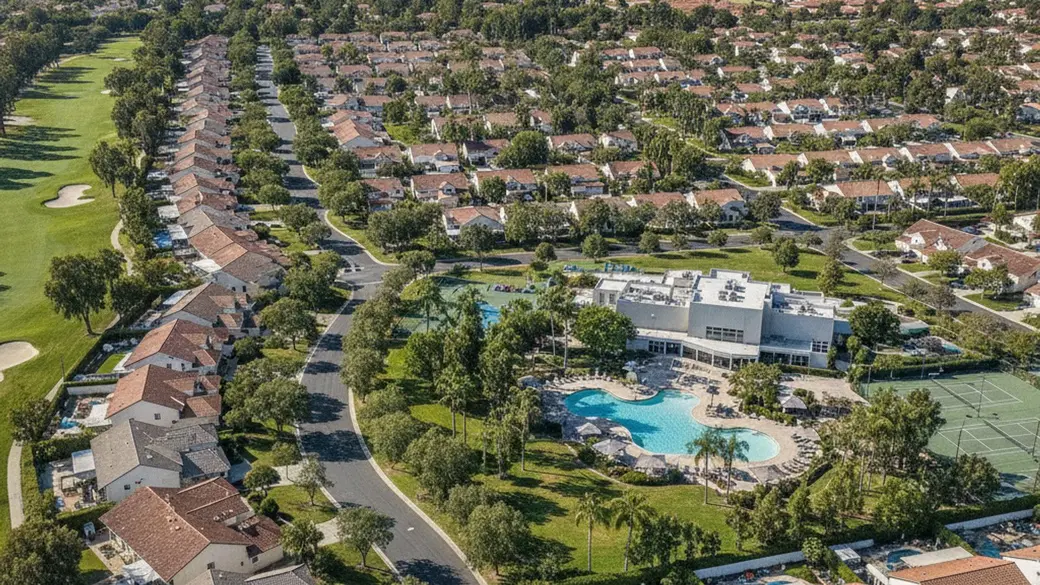
Active-adult communities are built around lifestyle amenities for residents who don't need daily medical assistance. Clubhouses, pools, organized social events - that's the model.
Independent living facilities work similarly but typically involve rental apartments rather than owned homes. Residents handle their own daily routines; management takes care of the grounds and building exterior.
Assisted Living and Continuing Care
Assisted living covers daily support with meals, medication management, and personal care. It's designed for residents who need regular help but don't require 24-hour skilled nursing.
A Continuing Care Retirement Community (CCRC) takes a tiered approach - you can move from independent living to assisted living or nursing care without leaving the campus. For a lot of buyers, that continuity is the whole point.
Notable 55-Plus Neighborhoods and Complexes
Buyers focused on retirement communities in Long Beach, CA tend to look at areas like Bixby Knolls, Belmont Shore, Naples, and Wilmington. Just outside the city in nearby Seal Beach, Leisure World is one of the largest and most recognized active-adult complexes in the region.
The local market runs the full range - luxury properties on one end, income-restricted senior housing on the other. Facilities like Gold Star Manor, Regent Villa, and Vista Del Mar offer lower-cost senior apartments for those who qualify based on local income limits.
Affordable and Low-Income Senior Housing
California defines low-income seniors based on the Area Median Income for Los Angeles County. The Housing Authority of the City of Long Beach updates those income limits annually for programs offering subsidized rent.
Contact communities like Gold Star Manor or Vista Del Mar directly to ask about current availability and waitlist times. Demand for affordable senior apartments in Long Beach consistently outpaces supply - that's not a recent development.
Buying Versus Renting in a Senior Community
Purchasing a home in a 55-plus community builds equity, but you're also carrying property taxes, insurance, and monthly HOA dues. On a fixed income, those ongoing costs add up in ways that aren't always obvious when you're focused on the purchase price.
Renting offers more flexibility and removes the risk of an unexpected repair bill landing on your desk. General apartment rents in Long Beach average between $1,743 and $2,709 per month, though specific 55-plus buildings may price differently depending on what's included.
Costs and Fees for Long Beach Senior Living
California HOA fees generally run between $300 and $400 per month, and can exceed $500 because of higher state labor costs. Nationally, age-restricted communities charge average monthly fees ranging from $200 to $800 - so California sits on the upper end of that range.
Fees typically cover exterior maintenance, landscaping, and access to shared facilities like fitness centers or pools. Before you close, ask to see the HOA's reserve fund. A community that's been deferring maintenance is a community that's building toward a special assessment.
Entrance Fees for Continuing Care
CCRCs require a substantial upfront entrance fee - in California, those fees start around $100,000 and can reach up to $1,000,000 depending on the property and the level of guaranteed care.
After that, residents pay ongoing monthly fees for independent living, which generally range from $3,000 to $6,000 statewide. In Los Angeles County, average CCRC monthly costs sit closer to $2,811, depending on the specific tier of service.
Medicare and Assisted Living Coverage
Medicare does not cover long-term room and board in an assisted living facility. It will pay for approved medical services, physical therapy, and short-term skilled nursing care received while you're living there - but not the room itself.
Seniors who can't cover assisted living out of pocket sometimes turn to Medi-Cal, if they meet the program's strict low-income thresholds. Medi-Cal has specific waiver programs that can help cover the cost of care services, though it still doesn't pay for the room.
Evaluating Long Beach for Retirement
The overall cost of living in Long Beach runs roughly 52.4% higher than the national average, and housing expenses are the main driver. If you're on a fixed income, that gap requires serious budget planning before you commit to anything.
That said, the Walk Score of 73 and the flat coastal terrain make getting around easier than a lot of California markets. You can find active-adult homes near the water in Belmont Shore or choose a quieter inland neighborhood like Bixby Knolls - the city offers both.
Pros and Cons of Age-Restricted Living
The case for a 55-plus community is straightforward: a built-in social network and no exterior home maintenance to worry about. You get shared amenities designed around your lifestyle without managing the upkeep yourself.
The case against is also straightforward. HOA rules can be restrictive, monthly fees can increase steeply, and if you want younger family members living with you full-time, most of these communities won't allow it.
Touring and Selecting a Property
You can learn a lot from a brochure, but there's no substitute for walking the property. Check the maintenance standards, pay attention to noise levels, and talk to people who actually live there.
Ask the management office for a history of HOA fee increases and any upcoming special assessments. That financial picture matters as much as the floor plan.
Frequently Asked Questions
What are the average HOA fees for 55+ communities in Long Beach, and what do they cover?
Specific Long Beach averages aren't published, but California HOA fees typically range from $300 to $400 per month and can exceed $500. Those dues generally cover exterior building maintenance, landscaping, and community amenities like pools and clubhouses.
Do both spouses have to be 55 or older to buy a home in a Long Beach retirement community?
No. The federal 80/20 rule requires that at least one occupant in 80% of the units be 55 or older. A younger spouse can usually live in the home, as long as the primary resident meets the age requirement and the specific HOA bylaws allow it.
What happens if I inherit a property in a Long Beach 55-plus community but I don't meet the age requirement?
You can own the property, but you generally can't live in it full-time if you're under the age restriction. Most heirs in that situation either sell the home or rent it to an age-qualifying tenant, depending on what the community's rental rules permit.
Are there affordable senior living communities in Long Beach near the water, or are they mostly inland?
There are 55-plus housing options across the city - coastal areas like Belmont Shore and Naples, as well as inland neighborhoods like Bixby Knolls and north Long Beach. Affordable, income-restricted complexes like Gold Star Manor and Vista Del Mar are located in various parts of the city, so check the specific addresses if proximity to the water matters to you.
Can I buy a home in a Long Beach senior community as an investment property and rent it out to qualifying tenants?
It depends entirely on the community's HOA bylaws. Some developments allow owners to rent to tenants who meet the 55-plus age requirement; others prohibit renting altogether and require owner-occupancy.
Do Long Beach retirement communities typically allow large dogs, or are there strict pet weight limits?
Most age-restricted communities enforce specific pet policies that limit the number, size, and breed of animals allowed. Review the HOA documents before you buy - weight limits that rule out large dogs are common.
Categories
- All Blogs (282)
- Aliso Viejo, California (2)
- Anaheim, Calfornia (5)
- Beach House (2)
- Best places for surfers (1)
- Bixby Knolls (1)
- Buena Park, California (2)
- Buying and Selling Real Estate (75)
- Buying or Seller Real Estate (2)
- California (2)
- California Beach House (2)
- Cerritos, California (1)
- Costa Mesa, California (1)
- Current Market (5)
- Cypress, CA (5)
- Dana Point, California (1)
- Downey, California (1)
- Equestrian (1)
- Fountain Valley, California (5)
- FSBO (1)
- Fullerton, California (1)
- Fur Parents (1)
- Garden Grove California (6)
- History (4)
- Holiday in Long Beach (1)
- home (12)
- Home Improvement (1)
- home value (7)
- Huntington Beach (5)
- Irvine, California (3)
- La Habra, California (1)
- Laguna Niguel, California (1)
- Lake Forest, California (1)
- Lakewood Event (2)
- Lakewood, California (46)
- Lifestyle (3)
- Listing (1)
- Long Beach Events (1)
- Long Beach Neighborhood (7)
- Long Beach, California (77)
- Los Alamitos (1)
- Los Alamitos, California (2)
- Market Reports (8)
- Mission Viejo, California (1)
- Mortgage Lender (1)
- Moving to Aliso Viejo, California (2)
- Moving to Anaheim, California (4)
- Moving to Buena Park, California (2)
- Moving to California (11)
- Moving to Cerritos, California (1)
- Moving to Costa Mesa, California (1)
- Moving to Cypress, CA (4)
- Moving to Dana Point, California (1)
- Moving to Downey, California (1)
- Moving to Fountain Valley, California (4)
- Moving to Fullterton, California (1)
- Moving to Garden Grove, California (5)
- Moving to Huntington Beach (5)
- Moving to Irvine, California (3)
- Moving to Lakewood (4)
- Moving to Lakewood, California (7)
- moving to Long Beach, California (17)
- Moving to Los Alamitos, California (2)
- Moving to Los Angeles (1)
- Moving to Mission Viejo, California (1)
- Moving to Newport, California (3)
- Moving to Orange County, California (20)
- Moving to Orange, California (2)
- Moving to Placentia, California (1)
- Moving to Rossmoor, California (1)
- Moving to San Clemente, California (2)
- Moving to Seal Beach, California (4)
- Moving to Signal Hill, California (2)
- Moving to Stanton, California (1)
- Moving to Tustin, California (2)
- Moving to Westminster, California (3)
- New Developments (1)
- Newport Beach, California (3)
- Orange County, California (10)
- Orange, California (3)
- Placentia, California (1)
- Real Estate (47)
- Real Estate Agent (28)
- Rossmoor, California (1)
- San Clemente, California (2)
- San Juan Capistrano, California (1)
- Saving Money (1)
- Seal Beach, California (6)
- Signal Hill, California (5)
- Social Media (1)
- Stagnation (1)
- Stanton, California (1)
- Success Story (1)
- surfing (1)
- Tips in Moving (2)
- Tustin, California (3)
- Westminster, California (3)
Recent Posts
GET MORE INFORMATION