

Understanding HOA Fees in Long Beach, CA
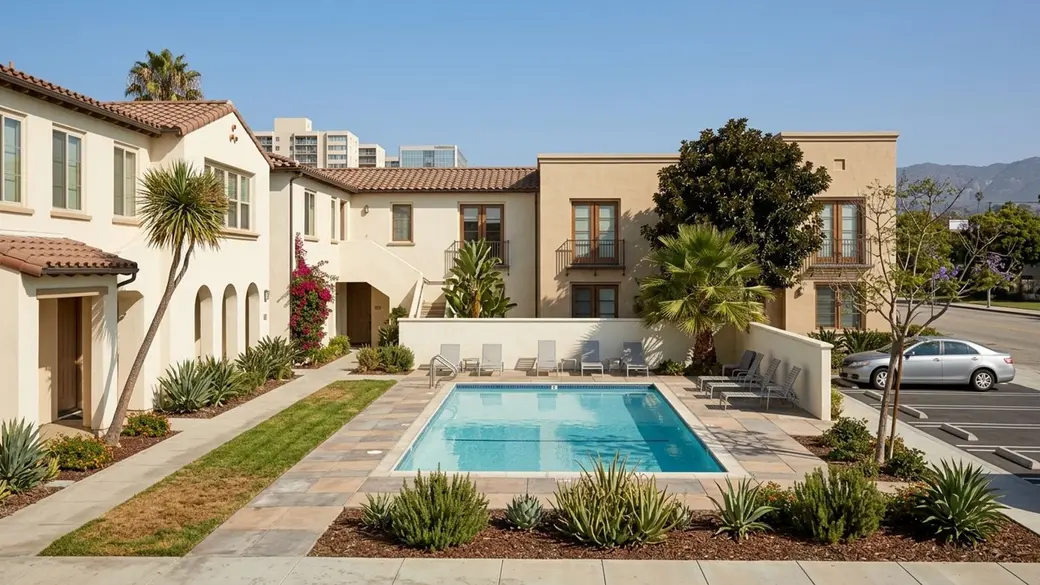
The median home sale price in the Long Beach, CA housing market is currently around $899,000, and if you're looking at condos or townhomes, you'll need to budget for monthly association dues on top of that. Homes here move relatively fast - roughly 43 days on market before selling - so you won't always have time to dig into the fee structure after you fall in love with a place.
Get comfortable with these numbers before you start writing offers. The dollar amount of the dues matters, but so does what you're getting for them.
How Much HOA Fees Cost in Long Beach
Dues in Long Beach generally run anywhere from under $100 to well over $600 per month. If you're shopping in Belmont Shore, Downtown, or Naples, expect to see fees in the $250 to $600 range for condos and townhomes.
The averages you'll find online vary pretty widely depending on who's counting and what types of properties they're tracking. Transparencyhoa.org puts the average monthly payment at $406 across 378 local associations. Hoacosts.com shows a much higher $1,145, but that figure skews toward luxury waterfront properties. Neither number is wrong - they're just measuring different slices of the market.
High-rise buildings with elevators and full-time security cost more to run, and that shows up in your monthly bill. A smaller inland townhome community with minimal shared space will almost always land at the lower end.
Billing Frequency for Association Dues
Most associations in Long Beach bill monthly, which tends to make budgeting straightforward since you're already thinking about your mortgage and property taxes on that same cycle.
Some communities go quarterly or annual, and that's more common in single-family neighborhoods where shared amenities might amount to little more than an entrance sign or a patch of green space.
During escrow, pull the governing documents and confirm the payment schedule before you close. Whether a payment is due every thirty days or once a year, missing it can mean late fees or a lien on your property.
What Your Association Payments Cover
A standard monthly fee pays for exterior building maintenance, landscaping in common areas, and the master insurance policy. In Long Beach, that typically includes things like community pools, fitness centers, and gated security entrances.
Part of every payment also goes into the reserve fund - the association's savings account for major long-term repairs. Think roof replacement or resurfacing a shared parking lot. It's not glamorous, but it's what keeps a community from falling apart.
What the fee doesn't cover: anything inside your unit. Interior repairs, appliance replacements, plumbing fixtures, your own renter's or homeowner's insurance - that's all on you.
How Local Association Dues Compare to Regional Averages
A 2023 Census study put the median monthly fee for the Los Angeles-Long Beach-Anaheim metro area at $340. Figures from 2025 showed typical Los Angeles area fees ranging from $300 to $500 per month, which puts Long Beach squarely in line with the surrounding metro.
California as a whole ranks ninth-highest in the nation for association costs. The 2024 Census Bureau data showed a statewide median of $278 per month - that's 106% above the national median of $135. So if you're coming from out of state and experiencing mild sticker shock, that context might help.
Differences by Community Type
Coastal condo complexes tend to carry the highest fees. Saltwater exposure is hard on buildings, and shared structural maintenance adds up quickly. High-rises in Downtown Long Beach layer in elevator upkeep and shared HVAC systems on top of that.
Single-family planned developments usually charge considerably less, often covering little more than street sweeping or basic landscaping. If you're looking at a 55+ community, expect mid-range fees that fund clubhouses and organized social programming rather than building infrastructure.
How to Tell if an Association Fee Is Too High
A high number isn't automatically a problem. If the fee covers water, trash, and full-time security, you're offsetting costs you'd pay separately anyway. The question is whether what you're paying for matches what you'll use.
The real warning sign is a high monthly payment in a community with visible deferred maintenance. If the common areas look rough but the fees are well above the $406 local average, something's off - whether that's mismanagement, underfunding, or both.
Before you close, read the reserve study. It tells you how much the association has saved for future repairs and whether the current dues are enough to keep things running. That document will tell you more than any walk-through will.
Other Association Costs Buyers Should Expect
Transfer fees in California typically run between $200 and $500, with the average landing around $225 to $250. It's a one-time administrative charge to update the association's records with your name - nothing more, but it's real money due at closing.
Some communities also charge a capital contribution or initiation fee at closing. That's separate from your ongoing dues and goes directly into the reserve fund as an immediate cash infusion.
Then there are special assessments. These are one-time charges the association levies when the reserve fund comes up short on a major repair - a sudden structural failure, severe weather damage, that sort of thing. You can't always predict them, but a healthy reserve study makes them far less likely.
Frequently Asked Questions
How much are HOA fees in Long Beach, CA?
They generally range from under $100 to over $600 per month. The average payment across hundreds of local associations is roughly $406. Neighborhoods like Belmont Shore and Naples often see fees between $250 and $600.
Are HOA fees monthly or yearly?
It depends on the community. Most condo and townhome complexes bill monthly. Some single-family neighborhoods with minimal shared amenities bill annually instead.
What does a monthly HOA fee mean and cover?
It's a mandatory recurring payment to the community's governing body. It covers shared expenses - exterior maintenance, landscaping, common area insurance, and contributions to the reserve fund.
How do Long Beach HOA fees compare to neighboring Los Angeles and Orange County cities?
They're closely aligned with the broader metro. Figures from 2025 showed typical Los Angeles area fees ranging from $300 to $500 per month, which matches the common $250 to $600 range found in many Long Beach neighborhoods.
How much is too much for an HOA fee?
A fee is too high if the cost drastically outweighs the amenities provided, or if the community shows signs of neglected maintenance. Check the reserve study - it'll tell you whether those high dues are funding the upkeep and savings they should be.
How much is an HOA transfer fee?
Transfer fees in California generally run between $200 and $500. The average cost is typically around $225 to $250, though complex administrative setups can push that higher.
Can a Long Beach HOA charge a special assessment on top of my regular dues?
Yes. If the reserve fund can't cover a major unexpected repair, the association can levy a special assessment. You'd pay that one-time or temporary charge in addition to your standard monthly dues.
Categories
- All Blogs (282)
- Aliso Viejo, California (2)
- Anaheim, Calfornia (5)
- Beach House (2)
- Best places for surfers (1)
- Bixby Knolls (1)
- Buena Park, California (2)
- Buying and Selling Real Estate (75)
- Buying or Seller Real Estate (2)
- California (2)
- California Beach House (2)
- Cerritos, California (1)
- Costa Mesa, California (1)
- Current Market (5)
- Cypress, CA (5)
- Dana Point, California (1)
- Downey, California (1)
- Equestrian (1)
- Fountain Valley, California (5)
- FSBO (1)
- Fullerton, California (1)
- Fur Parents (1)
- Garden Grove California (6)
- History (4)
- Holiday in Long Beach (1)
- home (12)
- Home Improvement (1)
- home value (7)
- Huntington Beach (5)
- Irvine, California (3)
- La Habra, California (1)
- Laguna Niguel, California (1)
- Lake Forest, California (1)
- Lakewood Event (2)
- Lakewood, California (46)
- Lifestyle (3)
- Listing (1)
- Long Beach Events (1)
- Long Beach Neighborhood (7)
- Long Beach, California (77)
- Los Alamitos (1)
- Los Alamitos, California (2)
- Market Reports (8)
- Mission Viejo, California (1)
- Mortgage Lender (1)
- Moving to Aliso Viejo, California (2)
- Moving to Anaheim, California (4)
- Moving to Buena Park, California (2)
- Moving to California (11)
- Moving to Cerritos, California (1)
- Moving to Costa Mesa, California (1)
- Moving to Cypress, CA (4)
- Moving to Dana Point, California (1)
- Moving to Downey, California (1)
- Moving to Fountain Valley, California (4)
- Moving to Fullterton, California (1)
- Moving to Garden Grove, California (5)
- Moving to Huntington Beach (5)
- Moving to Irvine, California (3)
- Moving to Lakewood (4)
- Moving to Lakewood, California (7)
- moving to Long Beach, California (17)
- Moving to Los Alamitos, California (2)
- Moving to Los Angeles (1)
- Moving to Mission Viejo, California (1)
- Moving to Newport, California (3)
- Moving to Orange County, California (20)
- Moving to Orange, California (2)
- Moving to Placentia, California (1)
- Moving to Rossmoor, California (1)
- Moving to San Clemente, California (2)
- Moving to Seal Beach, California (4)
- Moving to Signal Hill, California (2)
- Moving to Stanton, California (1)
- Moving to Tustin, California (2)
- Moving to Westminster, California (3)
- New Developments (1)
- Newport Beach, California (3)
- Orange County, California (10)
- Orange, California (3)
- Placentia, California (1)
- Real Estate (47)
- Real Estate Agent (28)
- Rossmoor, California (1)
- San Clemente, California (2)
- San Juan Capistrano, California (1)
- Saving Money (1)
- Seal Beach, California (6)
- Signal Hill, California (5)
- Social Media (1)
- Stagnation (1)
- Stanton, California (1)
- Success Story (1)
- surfing (1)
- Tips in Moving (2)
- Tustin, California (3)
- Westminster, California (3)
Recent Posts
GET MORE INFORMATION