

Seller Closing Costs in Lakewood, CA: What You Will Pay at Settlement
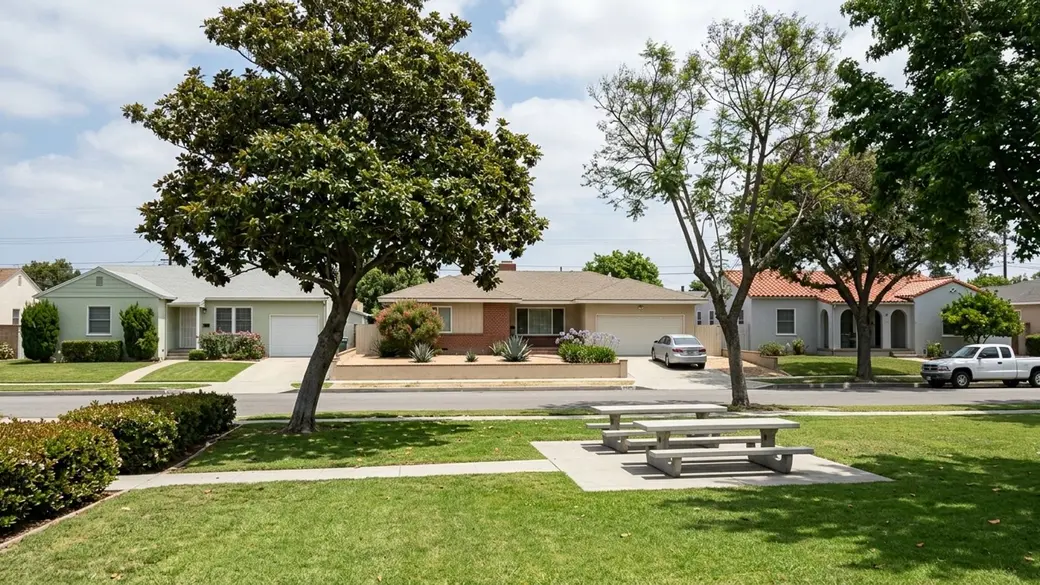
The median home price for those selling a home in Lakewood, CA is currently around $890,000. Homes are spending roughly 40 days on the market before going under contract, and with over half of recent properties selling above list price, sellers are in a solid position on the gross side of the ledger.
That word - gross - is worth paying attention to. The offer price is not what lands in your bank account. Before the title transfers, you're covering taxes, fees, and agent commissions, and those numbers add up faster than most sellers expect. Knowing what's coming lets you build an accurate forecast of your actual net proceeds, which is the only number that matters.
What Are Closing Costs for a Home Seller?
Closing costs are the administrative, legal, and tax expenses required to finalize the sale. As the seller, you don't write a check at the closing table - the escrow company tallies your charges and subtracts them from the buyer's incoming funds before wiring you the difference. You feel it in the proceeds, not in your checking account.
Buyers and sellers each carry their own separate ledger. The buyer's side is mostly about their mortgage - origination fees, appraisal, initial tax escrow. Your side is about clearing the title, paying agents, and covering government transfer taxes.
Comparing Seller and Buyer Expenses
Buyers focus on loan costs. Sellers carry the bulk of the real estate commission, plus they're responsible for guaranteeing a clean title - meaning no liens, no past-due taxes - before the new owner takes possession.
On title insurance specifically, buyers typically pay for the lender's policy, which their mortgage requires. The seller customarily pays for the owner's policy that protects the buyer against future ownership claims.
Average Seller Closing Costs in Lakewood
Sellers in California pay an average of approximately 2.71% to 2.73% of the sale price in standard closing costs. That covers title, escrow, and transfer taxes - it does not include agent commissions. Once you fold in the typical California commission rate of 5.08% to 5.47%, the total cost to sell often lands closer to 8% of the final sale price.
Because everything is percentage-based, your bill scales with your home's value. Los Angeles County's specific transfer tax rates also factor into the final total. A few price-point examples make this concrete.
Costs on a $300,000 to $500,000 Property
At $300,000, the baseline 2.71% in standard closing costs comes out to roughly $8,130. Add a 5.47% average commission - about $16,410 - and you're looking at total estimated costs of around $24,540.
At $500,000, standard closing costs reach approximately $13,550 and commissions add roughly $27,350. Total transaction expenses for a seller in that bracket: around $40,900.
Costs at Lakewood's Median Home Price
The current median sale price in Lakewood is about $890,000. Standard closing costs at 2.71% equal roughly $24,119. The state average commission of 5.47% adds another $48,683. Put it together and a typical Lakewood seller moving a median-priced home should expect total closing expenses around $72,802 - before paying off any remaining mortgage balance.
Who Pays the Fees in a California Home Sale?
California follows established local customs on how closing expenses get divided, and escrow companies use those customs as the baseline when drafting the settlement statement. Everything in a real estate contract is technically negotiable, but county norms are where the conversation starts.
The seller is generally on the hook for anything related to delivering a clear title and transferring ownership. The buyer handles costs tied to acquiring the property and securing their financing.
Typical Seller Obligations in Los Angeles County
In Los Angeles County, the seller customarily pays the county documentary transfer tax. Sellers also typically cover the owner's title insurance policy, which averages about $1,338 statewide. Escrow fees are often split evenly between buyer and seller, though that varies by transaction.
Lender-specific costs - appraisal fees, lender title policies - fall on the buyer's side.
Negotiating Who Pays What
These customary splits aren't set in stone. A buyer might offer to absorb the entire escrow fee to strengthen their bid. Or they might ask you for a credit toward their loan origination costs. Neither request is unusual.
The right way to evaluate these asks is against the purchase price being offered, not in isolation. A credit that looks painful on its own can make sense when the offer price compensates for it.
Itemized Closing Costs for Lakewood Sellers
Your escrow officer will prepare a closing disclosure listing every charge down to the cent. Knowing the standard categories ahead of time lets you review that statement intelligently rather than just signing where you're told.
Some of these fees are fixed government rates. Others depend on the service providers involved. The biggest numbers are tied directly to your sale price.
Real Estate Agent Commissions
This is almost always your largest line item. The statewide average total commission runs about 5.08% to 5.47%, typically split evenly between the listing agent and the buyer's agent. In Los Angeles County, that average sometimes trends closer to 5.67% given higher overall property values. You lock in this percentage when you sign your initial listing contract.
Transfer and Recording Taxes
The Los Angeles County Documentary Transfer Tax rate is $1.10 per $1,000 of property value, applied to all real property transfers within county boundaries. Lakewood does not impose an additional city-level transfer tax - you're only paying the base county rate, which is a meaningful difference from some neighboring cities.
Title, Escrow, and Prorated Expenses
Statewide, title service fees average about $2,471 and county recording fees run roughly $244. Combined escrow and title fees often equal around 1% of the final sale price.
Beyond those, sellers pay prorated property taxes and homeowners association dues - covering the exact number of days you owned the home during the current billing cycle before the buyer takes over.
How to Estimate Your Net Proceeds
Net proceeds is the number you care about: what hits your bank account after escrow closes. You get there by taking your sale price and subtracting closing costs, agent commissions, and your mortgage payoff.
A simple worksheet using Lakewood's local averages is the clearest way to do this.
Calculating Your Bottom Line
Say you sell for $890,000 with $300,000 still owed on your mortgage. Deduct the 5.47% commission - $48,683. Subtract the 2.71% standard closing costs - $24,119. Then subtract your $300,000 mortgage payoff.
That leaves you with net proceeds of roughly $517,198. That's the real number.
Estimating Expenses for a Cash Sale
A cash transaction generally reduces overall closing costs. Eliminating the buyer's lender means no lender-related fees, and cash deals tend to close faster, which can shrink your prorated property tax obligation.
That said, the seller still pays agent commissions, transfer taxes, and title fees unless you've negotiated something different. Most of the savings in a cash deal belong to the buyer - you benefit primarily from the faster timeline, not from a dramatically lower cost structure.
Ways to Lower Your Closing Expenses
Some fees are locked in by local government - you're not negotiating those. But you have real room to move on other costs, and being proactive before you sign anything is when you have the most leverage.
Every dollar you save on closing goes straight to your net proceeds.
Concessions and Commission Agreements
Commission is negotiable before you sign a listing agreement. Some agents will consider a reduced rate if they're also representing you on a subsequent purchase. It's a reasonable conversation to have upfront.
On the buyer side, carefully evaluate any requests for seller concessions. Contributing to a buyer's closing costs directly reduces your payout, so weigh those requests against the overall strength of the offer - price, terms, contingencies - not just the concession amount on its own.
Frequently Asked Questions
Who pays closing costs in California, the buyer or the seller?
Both parties pay closing costs in California. The seller typically covers real estate agent commissions, county transfer taxes, and the owner's title insurance policy. The buyer pays for loan origination fees, the appraisal, and the lender's title insurance policy.
What are the typical closing costs on a $300,000 house in Lakewood?
On a $300,000 house, a seller can expect about $8,130 in standard closing costs based on the 2.71% state average. Adding a typical 5.47% agent commission of roughly $16,410 brings total estimated expenses to approximately $24,540.
How do I calculate my closing costs as a seller in Lakewood?
Multiply your expected sale price by 2.71% for standard fees and by 5.47% for agent commissions. Subtract both totals along with your remaining mortgage balance from the sale price to arrive at your estimated net proceeds.
Can a California seller refuse to pay or negotiate closing costs?
Yes - you can refuse to pay certain discretionary costs or decline a buyer's request for closing cost credits. What you can't do is refuse legally mandated fees like the Los Angeles County documentary transfer tax.
How much can a seller contribute toward the buyer's closing costs in Lakewood?
That depends entirely on the buyer's loan program and down payment amount. Lenders cap seller contributions to make sure the buyer has a real financial stake in the property - there's no single universal ceiling.
Is there a local sales or transfer tax on a home sale in Lakewood, CA?
There's a county-level transfer tax. The Los Angeles County Documentary Transfer Tax rate is $1.10 per $1,000 of property value. Lakewood does not charge an additional city-level transfer tax on top of that.
When are seller closing costs paid during the escrow timeline?
At the very end. The escrow company deducts your costs from the buyer's incoming funds on closing day, then wires you the net proceeds. You never pay out of pocket - it all runs through escrow.
Categories
- All Blogs (282)
- Aliso Viejo, California (2)
- Anaheim, Calfornia (5)
- Beach House (2)
- Best places for surfers (1)
- Bixby Knolls (1)
- Buena Park, California (2)
- Buying and Selling Real Estate (75)
- Buying or Seller Real Estate (2)
- California (2)
- California Beach House (2)
- Cerritos, California (1)
- Costa Mesa, California (1)
- Current Market (5)
- Cypress, CA (5)
- Dana Point, California (1)
- Downey, California (1)
- Equestrian (1)
- Fountain Valley, California (5)
- FSBO (1)
- Fullerton, California (1)
- Fur Parents (1)
- Garden Grove California (6)
- History (4)
- Holiday in Long Beach (1)
- home (12)
- Home Improvement (1)
- home value (7)
- Huntington Beach (5)
- Irvine, California (3)
- La Habra, California (1)
- Laguna Niguel, California (1)
- Lake Forest, California (1)
- Lakewood Event (2)
- Lakewood, California (46)
- Lifestyle (3)
- Listing (1)
- Long Beach Events (1)
- Long Beach Neighborhood (7)
- Long Beach, California (77)
- Los Alamitos (1)
- Los Alamitos, California (2)
- Market Reports (8)
- Mission Viejo, California (1)
- Mortgage Lender (1)
- Moving to Aliso Viejo, California (2)
- Moving to Anaheim, California (4)
- Moving to Buena Park, California (2)
- Moving to California (11)
- Moving to Cerritos, California (1)
- Moving to Costa Mesa, California (1)
- Moving to Cypress, CA (4)
- Moving to Dana Point, California (1)
- Moving to Downey, California (1)
- Moving to Fountain Valley, California (4)
- Moving to Fullterton, California (1)
- Moving to Garden Grove, California (5)
- Moving to Huntington Beach (5)
- Moving to Irvine, California (3)
- Moving to Lakewood (4)
- Moving to Lakewood, California (7)
- moving to Long Beach, California (17)
- Moving to Los Alamitos, California (2)
- Moving to Los Angeles (1)
- Moving to Mission Viejo, California (1)
- Moving to Newport, California (3)
- Moving to Orange County, California (20)
- Moving to Orange, California (2)
- Moving to Placentia, California (1)
- Moving to Rossmoor, California (1)
- Moving to San Clemente, California (2)
- Moving to Seal Beach, California (4)
- Moving to Signal Hill, California (2)
- Moving to Stanton, California (1)
- Moving to Tustin, California (2)
- Moving to Westminster, California (3)
- New Developments (1)
- Newport Beach, California (3)
- Orange County, California (10)
- Orange, California (3)
- Placentia, California (1)
- Real Estate (47)
- Real Estate Agent (28)
- Rossmoor, California (1)
- San Clemente, California (2)
- San Juan Capistrano, California (1)
- Saving Money (1)
- Seal Beach, California (6)
- Signal Hill, California (5)
- Social Media (1)
- Stagnation (1)
- Stanton, California (1)
- Success Story (1)
- surfing (1)
- Tips in Moving (2)
- Tustin, California (3)
- Westminster, California (3)
Recent Posts
GET MORE INFORMATION