

What to Expect for Property Taxes in Long Beach, CA in 2026
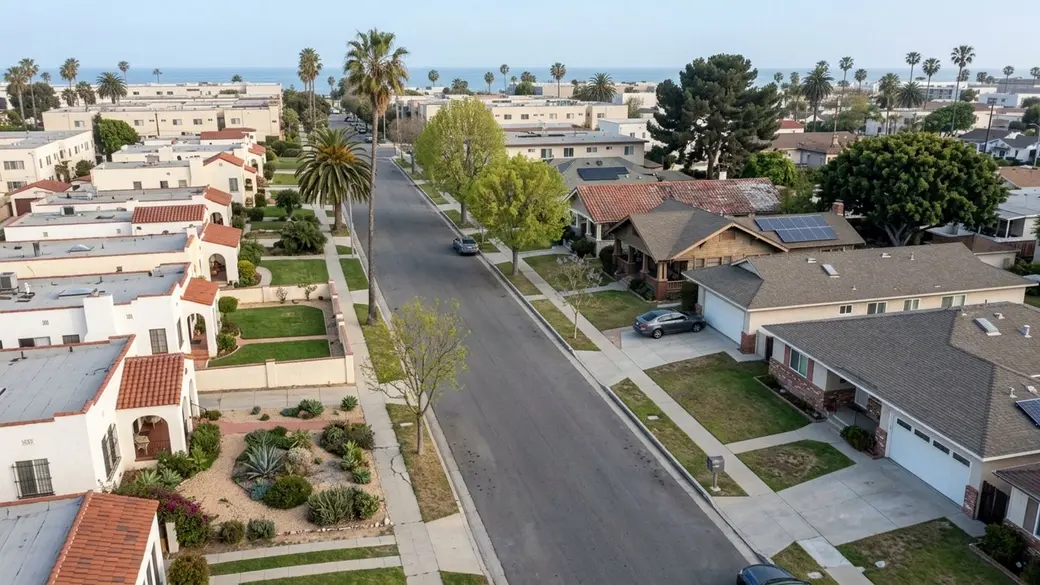
The median sale price in the Long Beach, CA housing market right now is around $899,400, and homes are sitting on the market for roughly 43 days before going under contract. If you're budgeting for a home in that range, property taxes aren't an afterthought - they're a real line item, and California's system works differently than most buyers expect. Two nearly identical houses on the same block can carry wildly different tax bills depending on when each owner bought in.
The state uses a percentage-of-value system rather than a fluctuating mill rate. Once you understand how that baseline interacts with Long Beach's local bonds and special assessments, you can build a much more accurate monthly budget before you ever make an offer.
Current Property Tax Rates in Long Beach
California sets a base property tax rate of 1% of a home's assessed value under Proposition 13. Local municipalities layer voter-approved bonds and special assessments on top of that, so the number you pay is almost always higher than the state floor.
In Long Beach, those additional local levies push the total rate above the state minimum. The effective property tax rate generally ranges from 0.64% to 1.33% depending on the specific neighborhood and its bond obligations. A widely cited median effective rate for the city lands at 1.33% - that figure accounts for the Los Angeles County portion alongside local district taxes.
Comparing Long Beach to State Averages
At 1.33%, Long Beach sits slightly above the California state median of 1.21% and trends higher than the national median of roughly 1.02%.
That range matters more than it might look on paper. A home in one ZIP code - say, 90802 - might carry different local bond measures than a property across town, so you'll want to verify the specific rate for any address you're seriously considering before you run your numbers.
How Your Property Tax Bill is Calculated
Your bill starts with your home's assessed value, which is typically set at your purchase price when you close. Under Proposition 13, the county assessor can't arbitrarily bump that figure up to match what the market is doing. The assessed value can only increase by a maximum of 2% per year.
That 2% cap is why a long-time owner pays taxes on an assessed value that may be a fraction of what the house would sell for today. When you buy that home, the assessed value resets to what you paid. You're taxed on your purchase price - not on what the previous owner paid two or three decades ago.
From there, the math is straightforward. The Los Angeles County assessor multiplies your new assessed value by the 1% state base rate, then adds the specific local bonds and special assessments tied to your address.
Estimating Taxes on a Typical Long Beach Home
Start with the current median sale price of roughly $899,400. In a neighborhood that only carries the 1% base rate, the baseline annual tax on that home comes out to $8,994.
For a more realistic estimate, apply the 1.33% median effective rate. Multiply $899,400 by 1.33% and you're looking at an estimated annual bill of about $11,962. Divide that by twelve and you know what to add to your monthly mortgage payment when you're stress-testing a budget.
Sales Tax Rates in Long Beach
Property taxes are one part of the picture. If you're also planning for furniture, renovations, or just day-to-day expenses after you move in, the local sales tax rate belongs in your planning too.
As of September 2026, the combined sales tax rate in Long Beach is 10.5%. That includes the 7.25% California state base tax, with the remainder made up of Los Angeles County taxes and Long Beach district taxes. The 10.5% rate applies across the city - downtown included - and you'll see it on most retail purchases and the materials you buy for home improvements.
Looking Up and Paying Your Tax Bill
The Los Angeles County Assessor and Tax Collector handles all property tax billing for Long Beach residents. You can pull up your records and current bill directly on the county's official website using either your Assessor's Identification Number (AIN) or your property address.
The county portal lets you pay online by e-check, credit card, or debit card. E-check is typically free; credit and debit cards carry processing fees. You can also mail a physical check or pay in person at the county tax collector's office if that's your preference.
Important Due Dates to Remember
California property taxes are paid in two installments each fiscal year. The first installment is due November 1 and goes delinquent if you haven't paid by December 10 - miss that deadline and the county tacks on a 10% penalty.
The second installment is due February 1 and becomes delinquent after April 10. Missing that one triggers another 10% penalty plus administrative fees. Most homeowners roll both payments into an escrow account so their lender handles the installments automatically and the deadline risk disappears.
Exemptions That Can Lower Your Tax Bill
California has a handful of programs that can reduce your taxable assessed value, and it's worth knowing what you qualify for before your first bill arrives.
The most common is the California Homeowners' Exemption, which is available to anyone using the property as a primary residence. It reduces your home's taxable assessed value by $7,000. At the 1% base rate, that works out to roughly $70 in savings per year - not life-changing, but you only have to apply for it once as long as you continue to occupy the home, so there's no reason to skip it.
Proposition 19 and Senior Transfers
Proposition 19, passed in 2020, offers more substantial relief for homeowners age 55 and older, severely disabled persons, and victims of wildfires. It allows qualifying homeowners to transfer their existing property's taxable base year value to a replacement home.
In practical terms, a senior can sell a home they've owned for decades and buy a new one in Long Beach without having their property taxes reset to current market prices. For retirees looking to downsize or relocate within the state, that protection makes a significant difference in what the move costs month to month.
Taxes on New Construction and Special Assessments
Buying new construction in Long Beach comes with a different tax timeline than buying an existing home. Once construction is complete and the property changes hands, the county assessor issues a supplemental tax bill covering the difference between the land's previous assessed value and the finished home's value. It catches some buyers off guard if they're not expecting it.
New developments frequently carry special assessments as well, funding local infrastructure that gets built alongside the homes. Those charges appear on your property tax bill next to the standard county and city levies.
Mello-Roos and Community Facilities Districts
Many newer California neighborhoods fall under Community Facilities Districts - Mello-Roos districts, as most people call them. These districts levy special taxes to pay for new roads, schools, and utility infrastructure in the immediate area.
A Mello-Roos tax isn't tied to your home's assessed value. It's usually a flat fee based on the home's square footage or lot size. That distinction matters: it doesn't shrink if values drop, and it doesn't benefit from the Proposition 13 cap. Ask whether any home you're considering carries a Mello-Roos assessment, because it can add hundreds or even thousands of dollars to your annual bill and it should factor into your total monthly cost calculation before you go under contract.
Frequently Asked Questions
What is the property tax rate in Long Beach, CA?
The effective property tax rate in Long Beach typically ranges from 0.64% to 1.33%. A widely cited median effective rate for the city is 1.33%, which includes the 1% state base rate plus local Los Angeles County and city bonds.
How much is property tax on an $879,000 house in Long Beach?
At the median effective rate of 1.33%, the annual property tax on an $879,000 home would be approximately $11,690. If the specific neighborhood only charges the 1% state base rate, the bill would be $8,790.
At what age do seniors stop paying property taxes in California?
They don't - there's no age at which property taxes stop entirely in California. What Proposition 19 does offer is the ability for homeowners age 55 and older to transfer their current home's lower assessed value to a new replacement property, which prevents a significant tax increase when they move.
When are property taxes due in California?
California property taxes are paid in two installments. The first is due November 1 and is delinquent after December 10. The second is due February 1 and is delinquent after April 10.
How do I look up and pay my property tax bill in Long Beach?
You can look up and pay your bill on the Los Angeles County Assessor and Tax Collector website. You'll need your property address or your Assessor's Identification Number (AIN) to access your records and submit an online payment.
Is it worth buying a home with Mello-Roos or a special assessment in Long Beach?
That depends on your monthly budget and how much you value the infrastructure the Mello-Roos funds - new schools, roads, and so on. These assessments add a flat fee to your tax bill regardless of the home's assessed value, so calculate the full monthly cost before you commit.
Categories
- All Blogs (282)
- Aliso Viejo, California (2)
- Anaheim, Calfornia (5)
- Beach House (2)
- Best places for surfers (1)
- Bixby Knolls (1)
- Buena Park, California (2)
- Buying and Selling Real Estate (75)
- Buying or Seller Real Estate (2)
- California (2)
- California Beach House (2)
- Cerritos, California (1)
- Costa Mesa, California (1)
- Current Market (5)
- Cypress, CA (5)
- Dana Point, California (1)
- Downey, California (1)
- Equestrian (1)
- Fountain Valley, California (5)
- FSBO (1)
- Fullerton, California (1)
- Fur Parents (1)
- Garden Grove California (6)
- History (4)
- Holiday in Long Beach (1)
- home (12)
- Home Improvement (1)
- home value (7)
- Huntington Beach (5)
- Irvine, California (3)
- La Habra, California (1)
- Laguna Niguel, California (1)
- Lake Forest, California (1)
- Lakewood Event (2)
- Lakewood, California (46)
- Lifestyle (3)
- Listing (1)
- Long Beach Events (1)
- Long Beach Neighborhood (7)
- Long Beach, California (77)
- Los Alamitos (1)
- Los Alamitos, California (2)
- Market Reports (8)
- Mission Viejo, California (1)
- Mortgage Lender (1)
- Moving to Aliso Viejo, California (2)
- Moving to Anaheim, California (4)
- Moving to Buena Park, California (2)
- Moving to California (11)
- Moving to Cerritos, California (1)
- Moving to Costa Mesa, California (1)
- Moving to Cypress, CA (4)
- Moving to Dana Point, California (1)
- Moving to Downey, California (1)
- Moving to Fountain Valley, California (4)
- Moving to Fullterton, California (1)
- Moving to Garden Grove, California (5)
- Moving to Huntington Beach (5)
- Moving to Irvine, California (3)
- Moving to Lakewood (4)
- Moving to Lakewood, California (7)
- moving to Long Beach, California (17)
- Moving to Los Alamitos, California (2)
- Moving to Los Angeles (1)
- Moving to Mission Viejo, California (1)
- Moving to Newport, California (3)
- Moving to Orange County, California (20)
- Moving to Orange, California (2)
- Moving to Placentia, California (1)
- Moving to Rossmoor, California (1)
- Moving to San Clemente, California (2)
- Moving to Seal Beach, California (4)
- Moving to Signal Hill, California (2)
- Moving to Stanton, California (1)
- Moving to Tustin, California (2)
- Moving to Westminster, California (3)
- New Developments (1)
- Newport Beach, California (3)
- Orange County, California (10)
- Orange, California (3)
- Placentia, California (1)
- Real Estate (47)
- Real Estate Agent (28)
- Rossmoor, California (1)
- San Clemente, California (2)
- San Juan Capistrano, California (1)
- Saving Money (1)
- Seal Beach, California (6)
- Signal Hill, California (5)
- Social Media (1)
- Stagnation (1)
- Stanton, California (1)
- Success Story (1)
- surfing (1)
- Tips in Moving (2)
- Tustin, California (3)
- Westminster, California (3)
Recent Posts
GET MORE INFORMATION