

What to Expect for Seller Closing Costs in Long Beach, CA in 2026
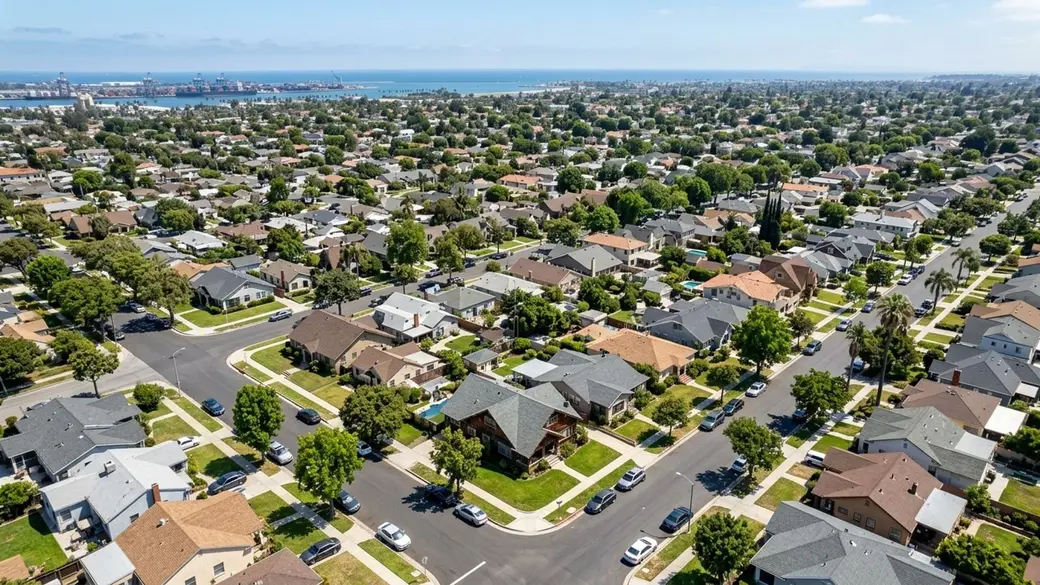
The median sale price when selling a home in Long Beach, CA is sitting around $852,500 right now. Sell at that number and your actual check will be noticeably smaller than the contract price - that gap is your seller closing costs.
Those costs cover the big three: agent commissions, title insurance, and county transfer taxes. With Long Beach homes spending about 41 days on the market before going under contract, you've got time to run the numbers before you're sitting at the closing table. The earlier you do, the clearer your picture of what you'll actually walk away with.
What Sellers Pay at Closing in California
California sellers typically pay between 6% and 10% of the final sale price in total closing costs. That range covers both the real estate commissions and the administrative fees required to transfer ownership.
None of this comes out of your pocket the day you close. Everything is deducted directly from your proceeds by the escrow company, which pays all the relevant parties before wiring you whatever's left. You'd only need to bring money to closing if your mortgage balance and fees actually exceeded what the buyer paid.
Buyers have their own costs - loan origination fees, their appraisal, their escrow funding - but sellers carry the heavier load here because custom has always had the seller covering commissions for both sides of the deal.
Closing Costs vs. Sale Proceeds
Your sale proceeds are the gross figure the buyer agreed to pay. Your net proceeds are what survives after closing costs, your existing mortgage, and any unpaid property taxes come out.
Getting to that net number early in the process matters, because it directly shapes your budget for whatever you're buying next.
Seller Costs vs. Buyer Costs
Sellers handle agent commissions, county transfer taxes, and owner's title insurance. Buyers cover loan origination fees, the appraisal, and lender's title insurance.
That's the standard division - but the exact split can shift if the purchase agreement negotiates it differently.
How Much Selling a Home Costs in Long Beach
At the Long Beach median of $852,500, you're looking at roughly $51,150 to $85,250 in total seller closing costs. Where you land in that 6% to 10% range depends on your agreed commission rate and your specific escrow fees.
Strip out the commissions and focus only on the administrative and tax piece: California's state average for that portion runs about 2.71% of the sale price, which on an $852,500 house comes to roughly $23,100.
The same math applies at other price points. A $500,000 condo in Long Beach will typically cost a seller between $30,000 and $50,000 to close. A cash sale might pull you toward the lower end by removing certain lender-required steps, but the core expenses don't disappear.
Example on a $300,000 Property
On a $300,000 sale, budget between $18,000 and $30,000 in total closing costs. The non-commission portion - the administrative fees and taxes - will run about $8,130 based on the state average. That still leaves room to pay off any remaining mortgage balance and land on your actual equity number.
Example on a $1,000,000 Property
A $1,000,000 home puts total closing costs somewhere between $60,000 and $100,000, with the administrative fees and taxes accounting for about $27,100 of that. Transfer taxes and title insurance premiums both scale directly with the sale price, so higher values mean higher absolute costs in those categories.
Splitting the Bill Between Buyers and Sellers
California practice puts real estate commissions, owner's title insurance, and documentary transfer taxes on the seller's side of the ledger. Buyers cover their loan fees, appraisal, and lender's title insurance.
Escrow fees are generally split evenly between the two parties in Southern California, though either side can propose a different arrangement during the offer phase.
Long Beach homes are currently selling at 99.9% of their list price on average - a relatively balanced market. That gives sellers a reasonable basis to push back if a buyer tries to tack on non-standard cost requests.
Can a Seller Refuse to Pay?
You can refuse to cover buyer-side closing costs or concessions. What you can't refuse are your own mandatory costs - county transfer taxes and existing mortgage payoffs have to be cleared to transfer clean title.
Commissions are a different story. Once you've signed a listing agreement, those fees are contractually binding. If the agent fulfilled their duties, you owe the commission at closing.
Negotiating Seller Concessions
Sometimes a buyer will ask for a credit to buy down their mortgage rate or offset their own closing fees - that's a seller concession. Lenders cap how much you can contribute this way, usually somewhere between 3% and 6% of the purchase price depending on the loan type.
Line-by-Line Seller Costs in Los Angeles County
Your final settlement statement will itemize every deduction from your proceeds. Those charges fall into five main categories, drawn from state averages and specific Los Angeles County rates.
Ask your agent for an estimated net sheet before you accept any offer - it keeps the closing statement from being a surprise. The escrow officer will give you the final, binding version a few days before the transaction closes.
Real Estate Agent Commissions
Based on a survey of local agents, the average total real estate commission in Long Beach is 5.03% of the sale price - a touch below the national average of 5.57%. That percentage is typically split between your listing agent's brokerage and the buyer's agent's brokerage.
Transfer and Recording Taxes
Los Angeles County charges a documentary transfer tax of $1.10 per $1,000 of the sale price. On an $852,500 home, that county tax works out to about $937.
Long Beach itself doesn't layer on a city-level documentary transfer tax. The city is also exempt from the Measure ULA mansion tax that applies in neighboring Los Angeles.
Title, Escrow, and Attorney Fees
Statewide data puts California sellers at about 0.32% of the sale price in title service fees, plus around 0.17% for the owner's title insurance policy. Escrow fees vary by provider and are usually split with the buyer.
California doesn't require a real estate attorney to close a residential sale. You'll only have attorney fees if you decide to hire one.
Prorated Property Taxes and HOA Dues
You owe property taxes and HOA dues up to the exact day the sale closes. If you've prepaid, you'll get a prorated credit back. If you're behind, escrow will pull the past-due amount from your proceeds before cutting your check.
Mortgage Payoff and Buyer Credits
Your existing mortgage balance is the single largest deduction from your gross proceeds - principal plus any interest accrued through the closing date. Any buyer credits or repair concessions you agreed to also come out here, before your final wire transfer is calculated.
Estimating Your Net Proceeds
A quick way to get your bearings: subtract 8% of the expected sale price from the offer, then subtract your current mortgage balance. That rough figure gives you a starting point for evaluating what an offer is actually worth to you.
For something more precise, your agent or escrow officer can put together a seller net sheet that plugs in the exact 5.03% Long Beach commission average and the $1.10 per $1,000 county transfer tax. With 740 homes currently in Long Beach inventory, knowing your real bottom line helps you respond to offers from a position of clarity rather than guesswork.
How to Calculate Your Final Take-Home
Start with the gross purchase price. Subtract the commission rate from your listing agreement, then the Los Angeles County transfer tax. Take off approximately 0.5% for your share of title and escrow fees, then deduct your remaining loan balance. What's left is a close estimate of your final check.
Estimating Costs for a Cash Sale
A cash buyer speeds things up but doesn't dramatically cut your seller costs. Commissions, transfer taxes, and title policies all still apply.
The real savings in a cash transaction are in the timeline - a faster close means less prorated property tax and daily mortgage interest building up while you wait.
Ways to Reduce Your Selling Expenses
Some of your costs are fixed - the Los Angeles County transfer tax isn't going anywhere. Others have room to move, and a 1% reduction on an $852,500 sale puts more than $8,500 back in your pocket.
The place to have those conversations is before you sign anything, not the week before closing.
Negotiating Commissions and Concessions
Commissions are the biggest single line item, and they're fully negotiable. A direct conversation with your listing agent about the rate is the highest-leverage move you can make on your net sheet.
On concessions: don't offer them preemptively. See what the offers actually look like before agreeing to credit the buyer for their closing costs.
Timing and Fee Shopping
Closing near the end of the month limits the daily mortgage interest you owe your lender - a small but real savings. You also have the right to shop for escrow and title providers. The buyer's agent may have a preferred company, but you can request a specific title company if you've found a better rate on the owner's policy.
Frequently Asked Questions
What percentage of the final sale price should I expect to pay in seller closing costs in Long Beach?
You should expect to pay between 6% and 10% of the final sale price in total closing costs. That includes the Long Beach average real estate commission of 5.03%, plus about 2.71% in administrative fees and taxes.
How much is the Long Beach city documentary transfer tax and is the seller always required to pay it?
Long Beach charges $0 for its city-level transfer tax and is exempt from the Measure ULA mansion tax. Sellers in Long Beach only pay the standard Los Angeles County documentary transfer tax, which is $1.10 per $1,000 of the sale price.
Are there any mandatory retrofitting or local compliance fees required before selling a house in Long Beach, CA?
Long Beach doesn't have an extra city-level compliance tax or transfer fee at closing. Your main mandatory local government cost is the Los Angeles County documentary transfer tax of $1.10 per $1,000 of the sale price.
Can I negotiate to have the buyer cover some of my seller closing costs in the current local market?
Yes - everything in a real estate contract is negotiable. That said, with Long Beach homes currently selling for 99.9% of their list price on average, buyers rarely offer to cover standard seller fees like the county transfer tax.
Do I need to bring cash to closing to pay my seller fees, or are they automatically deducted from my equity?
Your seller fees are automatically deducted from your equity at closing. You'd only need to bring cash if your existing mortgage balance and closing costs exceeded the final sale price.
When during the escrow process will I receive the final net sheet showing the exact breakdown of my costs?
The escrow officer will provide your final settlement statement a few days before the official closing date. That document lists the exact deductions for your agent commissions, title fees, and the Los Angeles County transfer tax.
Categories
- All Blogs (282)
- Aliso Viejo, California (2)
- Anaheim, Calfornia (5)
- Beach House (2)
- Best places for surfers (1)
- Bixby Knolls (1)
- Buena Park, California (2)
- Buying and Selling Real Estate (75)
- Buying or Seller Real Estate (2)
- California (2)
- California Beach House (2)
- Cerritos, California (1)
- Costa Mesa, California (1)
- Current Market (5)
- Cypress, CA (5)
- Dana Point, California (1)
- Downey, California (1)
- Equestrian (1)
- Fountain Valley, California (5)
- FSBO (1)
- Fullerton, California (1)
- Fur Parents (1)
- Garden Grove California (6)
- History (4)
- Holiday in Long Beach (1)
- home (12)
- Home Improvement (1)
- home value (7)
- Huntington Beach (5)
- Irvine, California (3)
- La Habra, California (1)
- Laguna Niguel, California (1)
- Lake Forest, California (1)
- Lakewood Event (2)
- Lakewood, California (46)
- Lifestyle (3)
- Listing (1)
- Long Beach Events (1)
- Long Beach Neighborhood (7)
- Long Beach, California (77)
- Los Alamitos (1)
- Los Alamitos, California (2)
- Market Reports (8)
- Mission Viejo, California (1)
- Mortgage Lender (1)
- Moving to Aliso Viejo, California (2)
- Moving to Anaheim, California (4)
- Moving to Buena Park, California (2)
- Moving to California (11)
- Moving to Cerritos, California (1)
- Moving to Costa Mesa, California (1)
- Moving to Cypress, CA (4)
- Moving to Dana Point, California (1)
- Moving to Downey, California (1)
- Moving to Fountain Valley, California (4)
- Moving to Fullterton, California (1)
- Moving to Garden Grove, California (5)
- Moving to Huntington Beach (5)
- Moving to Irvine, California (3)
- Moving to Lakewood (4)
- Moving to Lakewood, California (7)
- moving to Long Beach, California (17)
- Moving to Los Alamitos, California (2)
- Moving to Los Angeles (1)
- Moving to Mission Viejo, California (1)
- Moving to Newport, California (3)
- Moving to Orange County, California (20)
- Moving to Orange, California (2)
- Moving to Placentia, California (1)
- Moving to Rossmoor, California (1)
- Moving to San Clemente, California (2)
- Moving to Seal Beach, California (4)
- Moving to Signal Hill, California (2)
- Moving to Stanton, California (1)
- Moving to Tustin, California (2)
- Moving to Westminster, California (3)
- New Developments (1)
- Newport Beach, California (3)
- Orange County, California (10)
- Orange, California (3)
- Placentia, California (1)
- Real Estate (47)
- Real Estate Agent (28)
- Rossmoor, California (1)
- San Clemente, California (2)
- San Juan Capistrano, California (1)
- Saving Money (1)
- Seal Beach, California (6)
- Signal Hill, California (5)
- Social Media (1)
- Stagnation (1)
- Stanton, California (1)
- Success Story (1)
- surfing (1)
- Tips in Moving (2)
- Tustin, California (3)
- Westminster, California (3)
Recent Posts
GET MORE INFORMATION