

Effective Home Pricing Strategies in Long Beach, CA for 2026
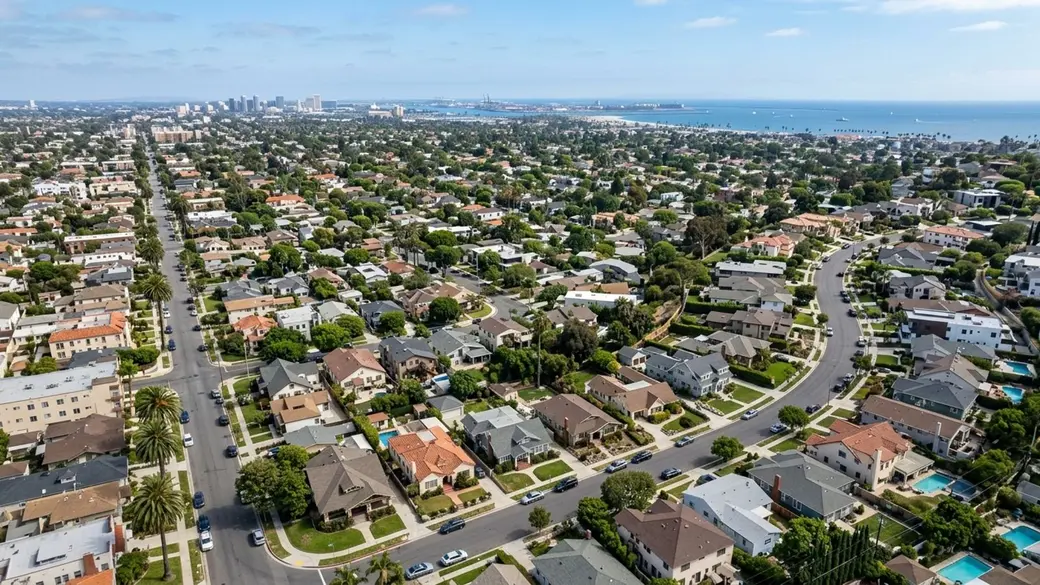
As of mid-2026, the median sale price for a home in Long Beach, CA hovers around $852,000. With active inventory sitting at roughly 740 available homes, anyone selling a home in Long Beach, CA has a real edge right now - but buyers are watching asking prices carefully, and they'll walk if the number feels off.
The price you set on day one determines how much foot traffic you get and how fast you end up under contract. Homes here are spending a median of 41 days on the market. Getting that number right means looking at recent sales data, competing listings, and what's actually happening street by street.
Local Market Conditions in Long Beach, CA
Long Beach is currently sitting at about 3.8 months of housing supply - that leans seller-favorable. For context, the broader Los Angeles County area recently hit 4.6 months, so Long Beach is running tighter than the surrounding region.
Sellers are securing nearly 100% of their asking price on average. That tells you well-priced homes are closing right where they should. Knowing these numbers helps you decide whether to price confidently or leave a little room.
Identifying the Current Market Phase
Real estate markets live on a spectrum between buyer and seller advantages. At 3.8 months of supply, Long Beach is in seller's market territory - a balanced market typically sits at five to six months of inventory, so you're well below that threshold.
In a seller-favored environment, properties tend to receive offers faster, as long as the list price lines up with recent sales. If inventory climbs toward that balanced range, sellers should be ready to adjust expectations - longer listing periods, more negotiation, and buyers who feel less urgency.
Seasonal Shifts in Buyer Demand
Spring and early summer bring the highest volume of buyers, typically people trying to get settled before fall. That increased competition can work in your favor. List in late fall or winter and you'll see fewer showings, though the buyers who do come tend to be serious rather than casual. Either way, your pricing should reflect the season - if you're launching during a slower stretch, padding the number and planning to drop later almost always backfires.
Proven Ways to Price Your Property
Over 44% of recently sold homes in Long Beach closed above their original list price. That's not an accident - it reflects sellers choosing their strategy deliberately based on their property and their goals.
Which approach makes sense for you depends on the home's condition, its location, and how fast you need to move. What's working in one zip code may not work two miles away.
Listing at Fair Market Value
Pricing at fair market value means you're asking exactly what recent buyers have paid for comparable homes. Serious buyers recognize a fair number quickly - they've done their homework - and they tend to move on it.
This approach also keeps you out of trouble at the appraisal stage. No awkward gap, no renegotiation, no deal falling apart because the lender's appraiser didn't agree with your number. Straightforward pricing, steady showings, clean close.
Pricing Just Below the Comps
Coming in slightly under comparable neighborhood sales is a deliberate play to generate immediate interest and pull in a larger buyer pool. The idea is that more eyes mean more offers, and competing offers push the final price back up to or past market value.
It can work well. It can also leave you accepting less than you wanted if only one buyer shows up. You need to be genuinely comfortable with that lower number going in - not just theoretically comfortable.
Testing the Upper Limits
Some sellers list above recent comparable sales, betting that the right buyer will pay a premium for something unique - exceptional upgrades, a specific location, features that don't exist elsewhere in the current inventory.
The risk is real. If buyers feel the price outpaces the value, they'll tour other listings instead of yours. Days on market accumulate, the listing starts to look stale, and eventually a price cut brings you back to where you probably should have started.
Using a Comparative Market Analysis
Automated online estimates are a starting point, nothing more. They don't know that one block in your neighborhood consistently outperforms the next one over, or that your specific floor plan sells differently than others in the same zip code. A Comparative Market Analysis - a CMA - is how you get to an actual number.
Real estate professionals put this report together by pulling properties of similar size, age, and condition and filtering out the broad regional noise to focus on what's happening right around your home.
Evaluating Neighborhood Comparables
Property values in Long Beach vary sharply by neighborhood. A home in Belmont Shore prices differently than a similarly sized house in Bixby Knolls - proximity to the coast, lot sizes, and architectural styles all factor in.
A proper CMA uses comps from your immediate area only. If your home has three bedrooms and two bathrooms, the analysis focuses on recent sales of three-bedroom, two-bathroom homes within a half-mile radius. Anything broader starts to lose its accuracy.
Comparing Active and Sold Listings
Sold data is the most reliable indicator of value because it shows exactly what buyers were willing to pay - not what a seller hoped to get, but what someone actually signed a contract for. Appraisers use closed sales for the same reason.
Active listings are your competition. Understanding what other sellers are asking helps you position your home so it offers better value or features than whatever else buyers are touring that same weekend.
Common Pitfalls When Setting a Price
Long Beach homes are taking a median of 41 days to sell right now. Overpriced properties tend to blow well past that, and once a listing goes stale, buyers start wondering what's wrong with it - even when nothing is.
The mistakes that create these situations are predictable. Most of them happen before the sign goes in the ground.
Dropping the Price Too Late
Starting high and slowly trimming the price over several months is one of the most common missteps sellers make. The problem is that the first two weeks of a listing generate the most attention - that's when motivated buyers are watching. Chasing the market down with repeated small cuts means you've already missed your best window, and buyers who notice a string of reductions tend to either lowball or move on.
Overlooking the Appraisal Value
If your buyer is financing the purchase, their lender will require an appraisal. If the appraised value comes in below the agreed-upon purchase price, the buyer has to cover the difference in cash or you have to bring the price down.
Pricing well above what recent sales support puts you at real risk of an appraisal gap. Factor that into your strategy before you pick a number, not after.
Letting Emotion Dictate the Number
It's your home. The memories are real, and so is the money you put into renovations over the years. But buyers are evaluating the home against current market alternatives - they're not buying your history with it.
Treat it like a business transaction. Let the recent sales data set the price. Personal attachment is a perfectly human thing, and it's also one of the most reliable ways to overprice a property.
Frequently Asked Questions
Is it better to price my Long Beach house below market value to spark a bidding war right now?
It depends on your comfort level and the current inventory in your specific neighborhood. With Long Beach inventory sitting at roughly 3.8 months of supply, pricing slightly below recent comparables can attract multiple buyers and drive the final price up. That said, you should be prepared to accept a lower figure if only one offer materializes.
How do I accurately price my home when property values vary so much between different Long Beach neighborhoods?
You should rely on a Comparative Market Analysis (CMA) that pulls data exclusively from your immediate area. A three-bedroom home in Belmont Shore will have different comparable sales than a similar home in Bixby Knolls. Focusing only on recent, hyper-local closed sales gives you the most accurate valuation.
Should I lower the asking price of my downtown Long Beach condo to offset high HOA fees?
Yes. Buyers factor monthly Homeowners Association (HOA) dues into their total carrying costs and debt-to-income ratios. If your building's fees are noticeably higher than competing downtown condos, pricing the unit slightly lower can help keep the overall monthly payment attractive to potential buyers.
What happens if I overprice my property and it sits on the Long Beach market for too long?
Homes that sit well past the current Long Beach median of 41 days often become stale, and buyers start assuming there's something wrong with the property. You'll likely need a price reduction to generate renewed interest - and that reduction tends to invite lower offers than you would have received if the home had been priced correctly from the start.
How should I adjust my listing price for a Long Beach home with unpermitted additions?
Price the home based only on the legally permitted square footage. Appraisers won't assign full value to unpermitted spaces, and buyers will typically factor in the cost of securing retroactive permits or removing the addition - either way, it lowers the final number they're willing to offer.
Does the time of year change how aggressively I should price my house in Long Beach, CA?
Yes. Spring and early summer bring the largest pool of buyers, which supports firmer pricing. Late fall and winter see less foot traffic. If you're listing during a slower stretch, adjusting your expectations accordingly helps prevent the home from sitting on the market longer than it needs to.
Categories
- All Blogs (282)
- Aliso Viejo, California (2)
- Anaheim, Calfornia (5)
- Beach House (2)
- Best places for surfers (1)
- Bixby Knolls (1)
- Buena Park, California (2)
- Buying and Selling Real Estate (75)
- Buying or Seller Real Estate (2)
- California (2)
- California Beach House (2)
- Cerritos, California (1)
- Costa Mesa, California (1)
- Current Market (5)
- Cypress, CA (5)
- Dana Point, California (1)
- Downey, California (1)
- Equestrian (1)
- Fountain Valley, California (5)
- FSBO (1)
- Fullerton, California (1)
- Fur Parents (1)
- Garden Grove California (6)
- History (4)
- Holiday in Long Beach (1)
- home (12)
- Home Improvement (1)
- home value (7)
- Huntington Beach (5)
- Irvine, California (3)
- La Habra, California (1)
- Laguna Niguel, California (1)
- Lake Forest, California (1)
- Lakewood Event (2)
- Lakewood, California (46)
- Lifestyle (3)
- Listing (1)
- Long Beach Events (1)
- Long Beach Neighborhood (7)
- Long Beach, California (77)
- Los Alamitos (1)
- Los Alamitos, California (2)
- Market Reports (8)
- Mission Viejo, California (1)
- Mortgage Lender (1)
- Moving to Aliso Viejo, California (2)
- Moving to Anaheim, California (4)
- Moving to Buena Park, California (2)
- Moving to California (11)
- Moving to Cerritos, California (1)
- Moving to Costa Mesa, California (1)
- Moving to Cypress, CA (4)
- Moving to Dana Point, California (1)
- Moving to Downey, California (1)
- Moving to Fountain Valley, California (4)
- Moving to Fullterton, California (1)
- Moving to Garden Grove, California (5)
- Moving to Huntington Beach (5)
- Moving to Irvine, California (3)
- Moving to Lakewood (4)
- Moving to Lakewood, California (7)
- moving to Long Beach, California (17)
- Moving to Los Alamitos, California (2)
- Moving to Los Angeles (1)
- Moving to Mission Viejo, California (1)
- Moving to Newport, California (3)
- Moving to Orange County, California (20)
- Moving to Orange, California (2)
- Moving to Placentia, California (1)
- Moving to Rossmoor, California (1)
- Moving to San Clemente, California (2)
- Moving to Seal Beach, California (4)
- Moving to Signal Hill, California (2)
- Moving to Stanton, California (1)
- Moving to Tustin, California (2)
- Moving to Westminster, California (3)
- New Developments (1)
- Newport Beach, California (3)
- Orange County, California (10)
- Orange, California (3)
- Placentia, California (1)
- Real Estate (47)
- Real Estate Agent (28)
- Rossmoor, California (1)
- San Clemente, California (2)
- San Juan Capistrano, California (1)
- Saving Money (1)
- Seal Beach, California (6)
- Signal Hill, California (5)
- Social Media (1)
- Stagnation (1)
- Stanton, California (1)
- Success Story (1)
- surfing (1)
- Tips in Moving (2)
- Tustin, California (3)
- Westminster, California (3)
Recent Posts
GET MORE INFORMATION